Carpets are more than just decorative elements—they provide comfort, warmth, and style to your home. However, they are also magnets for dust, dirt, allergens, and spills. Without proper care, carpets can quickly become worn, stained, and unhygienic. In 2026, maintaining carpets goes beyond simple vacuuming; it involves a combination of regular cleaning, deep cleaning, and preventive care.
This comprehensive guide will provide tips, techniques, and expert advice to keep your carpets looking fresh and healthy, while extending their lifespan.
Why Carpet Cleaning is Important
Carpets trap dirt, dust mites, pet hair, and allergens that can impact your family’s health. Regular cleaning helps:
-
Reduce allergens: Dust mites, pollen, and pet dander can cause allergies or respiratory problems.
-
Maintain hygiene: Regular cleaning prevents bacteria and germs from accumulating.
-
Extend carpet life: Removing dirt and stains prevents fiber damage and wear.
-
Enhance appearance: A clean carpet instantly brightens your home and improves comfort.
Types of Carpet Cleaning
1. Regular Vacuuming
Vacuuming is the most basic yet essential step. High-traffic areas should be vacuumed daily, while less-used areas can be vacuumed weekly. Using a HEPA filter vacuum ensures dust, pet hair, and allergens are removed effectively.
2. Spot Cleaning
Spills happen, but immediate action can prevent permanent stains. Blot spills with a clean cloth and apply a mild carpet cleaner or a homemade solution of water and vinegar. Avoid rubbing to prevent damage to carpet fibers.
3. Steam Cleaning (Hot Water Extraction)
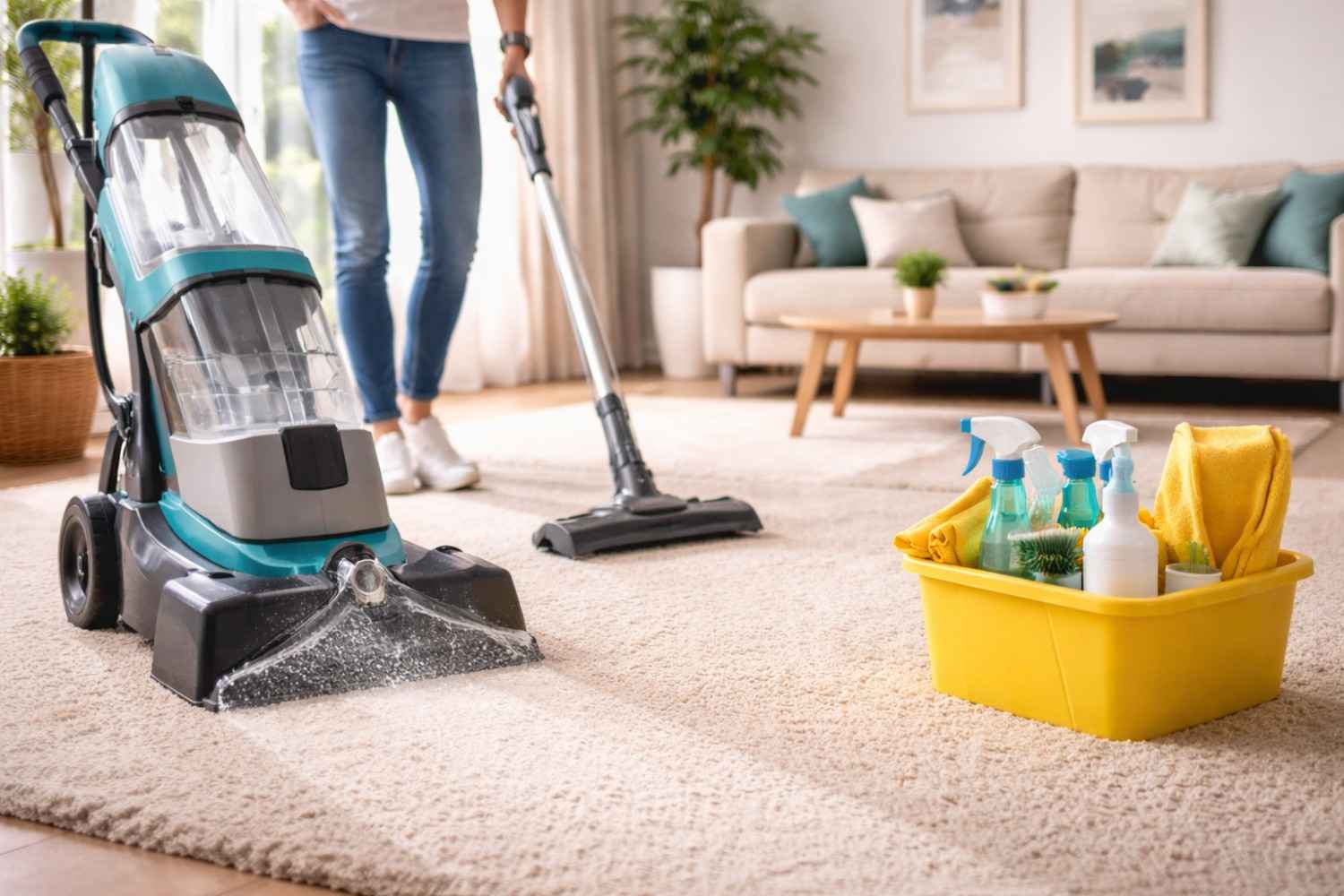
Steam cleaning uses hot water and cleaning solutions to remove dirt and bacteria deep in the carpet fibers. It’s particularly effective for homes with children, pets, or allergy sufferers.
4. Dry Carpet Cleaning
Dry cleaning uses minimal moisture and specialized powders to clean carpets. This method is faster and reduces drying time, making it ideal for commercial spaces or heavily used homes.
5. Shampooing
Carpet shampooing applies a foamy cleaning solution to lift dirt and stains. Afterward, the carpet must be rinsed and dried. Shampooing is recommended for heavily soiled or high-traffic carpets.
DIY Carpet Cleaning Tips
-
Vacuum frequently – Pay attention to corners, edges, and under furniture.
-
Blot spills immediately – Prevent stains from setting using a clean cloth.
-
Use baking soda – Sprinkle, let sit, then vacuum to deodorize carpets.
-
Rotate rugs and furniture – Prevent uneven wear.
-
Use protective mats – Place rugs at entrances to trap dirt.
When to Hire Professional Carpet Cleaners
Professional cleaning is recommended every 6–12 months, depending on usage. Benefits include:
-
Deep cleaning that removes embedded dirt and allergens
-
Specialized stain removal for wine, coffee, pet accidents, and ink
-
Faster drying times using industrial-grade equipment
-
Carpet rejuvenation and a longer lifespan
Homes with pets or allergy sufferers benefit the most from professional cleaning, ensuring carpets remain safe and hygienic.
Common Carpet Problems and How to Solve Them
1. Stains
Treat spills immediately. For tough stains, professional cleaners use specialized techniques and solutions to restore carpets.
2. Odors
Odors from pets, spills, or moisture can linger. Baking soda, vinegar, and enzymatic cleaners neutralize smells. Steam cleaning can eliminate stubborn odors.
3. Flattened Fibers
High-traffic areas may appear worn. Vacuuming, rotating furniture, and professional grooming can restore fiber texture.
4. Allergens
Dust mites, pet dander, and pollen accumulate in carpets. Regular vacuuming with a HEPA filter and periodic deep cleaning reduce allergens significantly.
Preventive Carpet Care Tips
-
Use doormats to reduce dirt entering the home
-
Remove shoes indoors to minimize stains
-
Establish a cleaning routine – Daily vacuuming plus periodic professional care
-
Treat stains immediately – Quick action prevents permanent marks
-
Control humidity – Prevent mold and mildew growth
Eco-Friendly Carpet Cleaning
Eco-friendly methods are safer for children, pets, and the environment:
-
Natural solutions like vinegar, baking soda, and essential oils
-
Low-moisture cleaning methods to reduce water usage
-
HEPA-filter vacuums to remove allergens efficiently
By using sustainable practices, you maintain hygiene while protecting the environment.
Benefits of Regular Carpet Cleaning
-
Improved indoor air quality
-
Healthier living environment free from allergens
-
Extended carpet lifespan
-
Stain and odor prevention
-
Cleaner, more visually appealing home
Conclusion
Carpet cleaning is essential for a healthy, comfortable, and attractive home. Combining daily maintenance, spot cleaning, and professional deep cleaning ensures carpets remain fresh, hygienic, and durable. Regular care not only enhances aesthetics but also protects your family’s health and prolongs carpet life.
With the right approach, your carpets can stay clean, soft, and vibrant for years, creating a welcoming and safe home environment.
FAQs
1. How often should carpets be professionally cleaned?
Every 6–12 months, depending on traffic, pets, and household activity.
2. Can I remove stains myself?
Yes, small spills can be blotted immediately with mild cleaning solutions.
3. What is the best method for deep cleaning carpets?
Steam cleaning or hot water extraction is the most effective for embedded dirt and allergens.
4. Are eco-friendly cleaners effective?
Yes, they are safe for children and pets while effectively removing dirt and odors.
5. How can I prevent odors in carpets?
Vacuum regularly, treat spills immediately, and use baking soda or enzymatic cleaners.
6. Do carpets harbor allergens?
Yes, dust, pollen, and pet dander accumulate over time; regular cleaning reduces allergens.
7. Is carpet cleaning worth the cost?
Professional cleaning improves hygiene, prolongs carpet life, and enhances comfort, making it a valuable investment.