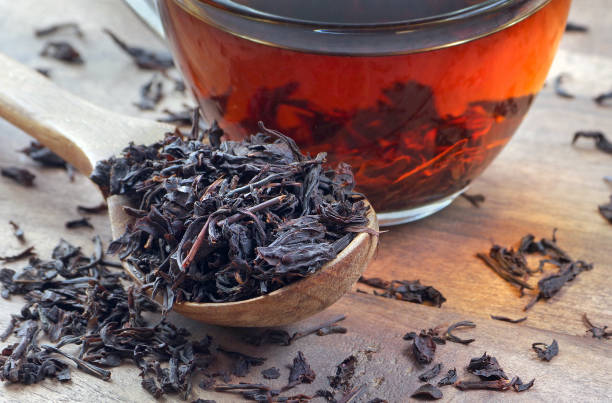
There is something undeniably powerful about a deep, dark cup of black tea. For many of us, it is the only thing that can truly compete with coffee when it comes to that morning jolt. While green teas are appreciated for their grassiness and white teas for their whisper-light floral notes, black tea is the heavy hitter of the tea world. It is robust, it is malty, and when brewed correctly, it has a presence that can stand up to milk, sugar, and even the groggiest of Monday mornings.
If you are someone who likes their tea with a bit of a kick, you probably find yourself searching for the richest profiles possible. But what actually makes a tea strong? Is it the caffeine content, the level of tannins, or the way the leaves are processed? The truth is, it is a combination of all three. When we talk about strength, we are usually looking for that deep, astringent bite and a flavor that lingers long after the last sip.
The Origins of Intensity
The journey toward finding the most powerful brew usually leads us to two specific regions: Assam in India and the highlands of Kenya. These areas are famous for producing teas that are unapologetically bold.
Assam tea is grown in the lowlands of Northeast India, where the heat and humidity are intense. This tropical environment produces a leaf that is naturally high in tannins and has a distinct malty sweetness. It is the base for most breakfast blends because it has the structure to remain flavorful even after you add a generous splash of milk. Kenyan teas, on the other hand, are often grown at higher altitudes and processed using a method that results in tiny, dense grains. This leads to a very fast extraction and a cup that is dark, brisk, and incredibly energizing.
CTC vs. Full Leaf: Why Shape Matters
When you are shopping for a powerful brew, you will notice two main styles of processing: Orthodox (full leaf) and CTC. CTC stands for Crush, Tear, Curl. In this process, the leaves are passed through rollers with hundreds of small teeth that literally crush the tea into small, uniform pellets.
The reason CTC tea is often considered the strongest black tea is because the small surface area of the pellets allows the water to extract the flavor and caffeine almost instantly. If you use a full leaf tea, the water has to work its way into the large, twisted leaves, resulting in a more nuanced and slower brew. But if you want a cup that looks like ink and hits like a freight train, CTC is almost always the way to go. It is the secret behind the punchy character of traditional Irish Breakfast blends.
The Role of Caffeine and Tannins
We cannot talk about strength without talking about the chemical makeup of the leaf. Caffeine provides the mental alertness we crave, but tannins provide the body and the “pucker” factor. Tannins are polyphenols that give black tea its characteristic astringency.
Interestingly, some of the strongest tasting teas actually have less caffeine than lighter tasting ones, and vice versa. However, generally speaking, black teas that are harvested during the “second flush” in late spring or early summer tend to be the most concentrated. These leaves have had more time to soak up the sun and develop the complex sugars and alkaloids that result in a truly potent drink. When you brew these leaves, you aren’t just getting a caffeine hit; you are getting a rich, textured experience that coats the palate.
How to Brew for Maximum Impact
If you buy the best leaves in the world but brew them with lukewarm water for sixty seconds, you are going to be disappointed. To get the most out of a strong black tea, you need to respect the chemistry of the steep.
First, use boiling water. Black tea needs that high heat to release its tannins and deep pigments. Second, don’t be afraid to let it sit. While over-steeping can lead to a bitter cup, a strong tea usually needs a solid four to five minutes to reach its full potential. Finally, consider your water-to-leaf ratio. Most people use too much water and not enough tea. If you want a truly robust experience, try adding an extra teaspoon of leaves or using a slightly smaller mug. This creates a concentrated infusion that showcases the true character of the region.
The Comfort of the Morning Ritual
There is a psychological element to drinking a strong brew as well. There is something comforting about the dark, amber color and the steam rising from a heavy ceramic mug. It signals to the brain that it is time to focus. Unlike the jittery, sometimes erratic energy of an espresso, the energy from a strong black tea is steady and grounded. This is thanks to L-theanine, an amino acid found in tea that promotes a sense of calm alongside the caffeine. It is the perfect balance for someone who needs to be productive but wants to remain composed.
Conclusion
Finding the strongest black tea is a personal journey that depends on whether you value a high caffeine kick or a deep, malty flavor profile. From the sun-drenched plains of Assam to the high-altitude gardens of Kenya, there is a world of intensity waiting to be explored. By choosing the right processing style and mastering your brewing technique, you can turn a simple morning drink into a powerful ritual. Whether you drink it black to appreciate the raw astringency or with a bit of honey and milk for a creamy treat, a bold black tea is a timeless classic that never fails to deliver.
Frequently Asked Questions
- Which black tea has the most caffeine?
Generally, Assam and Kenyan teas are among the highest in caffeine. However, the way you brew it matters more than the specific leaf. Using more leaves and steeping for a full five minutes with boiling water will maximize the caffeine extraction. - Is Earl Grey considered a strong black tea?
Earl Grey is a flavored tea, usually made with a base of Chinese or Indian black tea scented with bergamot oil. While it can be strong if the base tea is high quality, it is usually prized more for its citrus aroma than its raw strength. If you want strength, look for an “Extra Bold” or “Breakfast” version. - Why does my strong tea taste bitter?
Bitterness usually comes from steeping the tea for too long or using leaves that are poor quality. If you want a strong cup without the unpleasant bitterness, try using more leaves but steeping them for a shorter time. This gives you plenty of flavor and caffeine without pulling out the harshest tannins. - Can I drink strong black tea on an empty stomach?
Some people find that the high tannin content in strong black tea can cause a bit of nausea if they haven’t eaten. If you have a sensitive stomach, it is usually best to enjoy your tea alongside breakfast or with a splash of milk to soften the tannins. - Does adding milk reduce the strength of the tea?
Milk will change the flavor profile and soften the astringency, but it doesn’t actually remove the caffeine or the beneficial compounds. In fact, many of the strongest teas in the world are designed specifically to be drunk with milk, as the creaminess complements the malty notes perfectly.