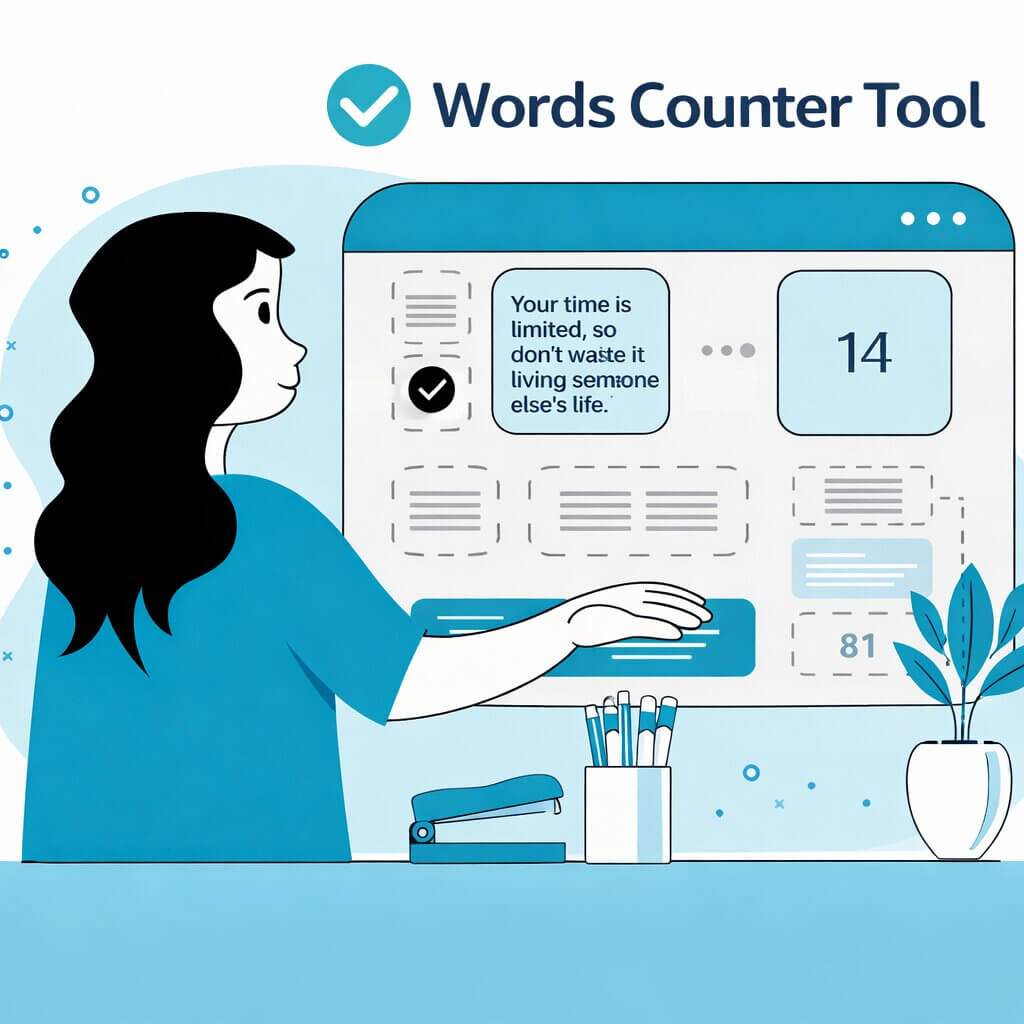
When it comes to writing, editing can take up a lot of time. Drafting unique ideas can come fairly easily, but focusing and structuring those ideas into organized, concise, and client-compatible material requires a lot of time and effort. A word counter can greatly assist in this editing process. A word counter can be an invaluable tool to an editor who is up against a tight deadline. Knowing an important piece of editing information such as word count can ease your mind and help in transitioning between a rough draft and a more refined version of the document. Word counting tools can help writers stay focused and edit more professionally by providing immediate insight into word count, character count, and composition.
Why Lack of Editing Data Makes Writers Edit Less
Without a measurable editing goal, many writers lose momentum during the editing process. Losing track of word count means writing is often looped into arbitrary, repetitive, and time wasting editing cycles. A word counter can save the day as it allows writers to edit in a faster and more efficient way.The use of word count during editing provides a shortcut when it comes to decision making. Instead of rereading sections of the work, the editor can focus on the sections that go beyond the word count, saving time, mental energy, and creative energy when it comes to a specific editing task.
Using Word Count to Manage Length of Writing
In the world of writing, the length of writing is something that is very significant. Clients place restrictions, the writing platform has restrictions, and the audience prefers concise work. The word count gauge gives the writing editor an instant assessment of how close the draft is to the desired length.
In making cuts, writing editors no longer need to make random cuts, and intentional cuts can be made. To better manage the intentional cuts, the editor can measure the word count to better decide if a paragraph can be removed, if individual sentences should be shortened, or if ideas should be combined. Word counters give the writing editor the means to manage the word count better.
Editing is not always about checking word count; sometimes it is about checking the number of characters. These editing tasks sometimes include titles, promotional materials, and social media content. Under these conditions, it is essential to check the number of characters to facilitate a better editing process.
By checking the number of characters, the writing editor ensures that the number of characters in each sentence matches its purpose. The writing editor can select multiple sentence options to arrive at the clearest sentence that meets the requirements. The editing process is streamlined and the overall quality and effect of the content improved.
Improving Text Structure with Insights from a Paragraph Counter
The length of paragraphs can affect the overall readability of a document. A paragraph counter reveals potential structural issues without the editor having to manually check each paragraph’s size.
Access to paragraph data allows editors to divide dense paragraphs into smaller units. This can help improve the overall experience of the reader, and helps the editor use their time more efficiently, as they will not have to continuously revisit the document to find unexamined structural issues.
Editing for Browsing Time and Reader Interest
Editing involves more than correct guidelines. Time estimations are one of the most important modern editing tools. Estimates allow the editor to evaluate the balance of the overall text, and provide them a gauge to determine if text should be more concise.
When editors determine that the estimated time to read the document is excessive, that excessive time reading is a justification for removing unnecessary text or shortening descriptions. This streamlining helps to balance the length of the document with the expectations of the readers and raises the level of interest and engagement with the content.
Professional Editing Involves Speed and Precision
The work of writers and editors is often time sensitive. A rapid word counter is crucial for tight time constraints to ensure uninterrupted workflow.
The specific free word counter to which you refer enables you to move content closer to its finalized version with each individual edit you make. This aids in preventing both over and under editing, thus saving you time. The combination of speed and precise editing is what increases the overall profitability of the editing process.
Streamlined Editing Across Multiple Formats
The editing of blogs, emails, reports, and social media posts each requires the editor to mentally adjust and switch to a different format. The overall word, character, and paragraph count of the document is one metric that can make these transitions much easier.
Instead of having to change their mindset to adapt to each different format, editors can edit based on the word count goal they have. This helps maintain focus during tight editing sessions that require a lot of varied content to be processed, particularly in one day.
Improved Clarity Metrics to Lower the Number of Revision Cycles
One of the biggest productivity killers is the number of times content is revisited. This cycle can be broken by having a clear metric that lets the editor know how far away they are from meeting the word or character count. Drafts are returned to clients, and edits are buffered by clients receiving drafts that have already been guided to achieve their requested number of words and/or characters.
This will help reduce the number of edits that are processed in the editing cycle and speed up the number of times the editing cycle is processed. Simply having a word count tracker can dramatically increase the number of times a document is processed in the revision cycle and edit cycle.
Building Editing Confidence Through Measurement
Confidence stems from certainty. Counts provide backing and support certainty, helping the writer turn from their gut instinct as the primary guide in editing.
With quantifiable and measurable data, editors are better able to trust their decisions. Less doubt translates to quicker edits and better quality. In the background, the value of word counters reinforces the good decision making of the professional.
Selecting a Word Counter to Enhance Editing
Not all tools are created equal. An effective counter should prioritize speed and provide unencumbered focus. It should also display the word count in real time, provide a character count, count paragraphs, and provide an estimated read time.
When the tool provides a counter seamlessly, editing can transition from a technical battle to completely focused. Click here for more information.
FAQs
In what manner does a word counter improve the editing process?
The word counter does not require the editor to reread drafts to gain an understanding of the count, but does so instantly and identifies problematic areas in the structure.
Why is character count important?
The character count is critical, as it controls the digital real estate of the content. It allows editors to refine their text to meet the requirements.
Can word counters aid in minimizing time spent on editing?
Yes, word counters assist in speeding up the editing process by pointing out issues with length and structure so that the editor can minimize issues that require multiple revisions.
How does estimated read time influence the content editor’s decision on editing?
Estimated read time assists the editor in assessing whether the content seems too lengthy or too brief, which determines cuts that create more reader engagement.
What features should an editor expect in a word count checker?
Editors expect features such as a precise word count, character count, count characters, paragraph count, and accurate estimated read time.






![Dr.Melaxin - Peel Shot Exfoliant White Rice Ampoule [80ml]](https://shadowforgesolutions.com/wp-content/uploads/2026/02/Hoorbeauty-Copy.webp)