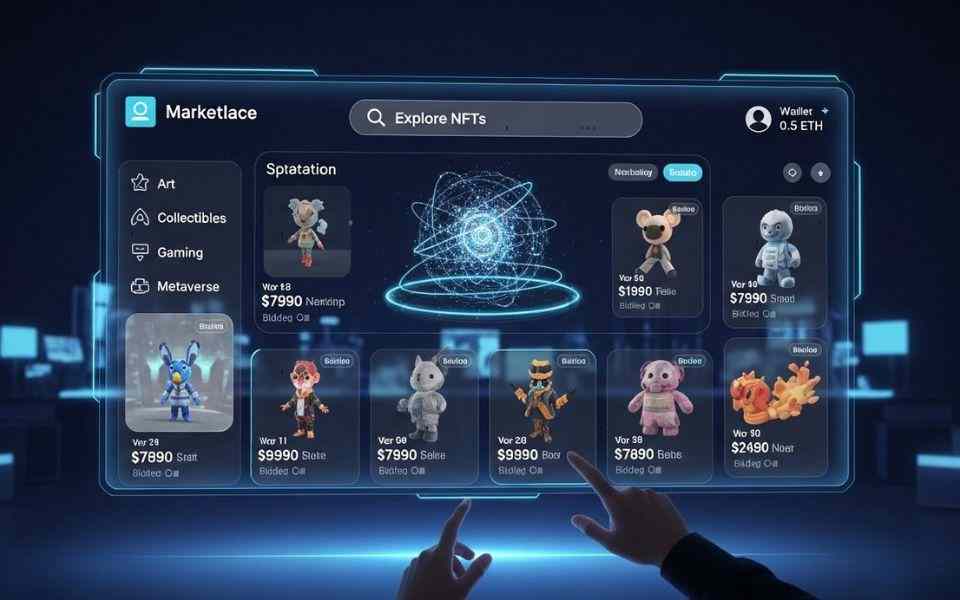
Non-fungible tokens (NFTs) have rapidly transformed the concept of digital ownership. Built on blockchain technology, NFTs allow creators to tokenize unique assets such as artwork, music, gaming items, and collectibles. As the NFT market expanded, billions of dollars in trading volume flowed through major marketplaces, proving the strong demand for verifiable digital assets and creator-driven economies.
However, most NFTs were originally built within single blockchain ecosystems such as Ethereum, Solana, or Polygon. While these networks offer unique advantages like faster transactions or lower fees, they also create fragmented marketplaces. NFTs minted on one blockchain typically cannot be traded or transferred easily to another network, limiting interaction between different blockchain communities.
This fragmentation directly affects liquidity and accessibility. When NFT marketplaces operate within isolated ecosystems, the pool of buyers and sellers becomes smaller. Creators may struggle to reach broader audiences, and collectors may miss opportunities to access assets across different networks. Cross-chain NFTs are emerging as a solution to this limitation by enabling digital assets to move or interact across multiple blockchains, creating a more connected and efficient marketplace environment.
The Fundamentals of Cross-Chain NFTs
Cross-chain NFTs are digital assets that can operate across multiple blockchain networks rather than being confined to the blockchain where they were originally minted. This allows NFTs to be transferred, represented, or utilized on different networks while maintaining their ownership and authenticity.
Traditional NFTs are tied to their native blockchain infrastructure. For example, NFTs on Ethereum typically follow ERC-721 or ERC-1155 standards and function only within Ethereum-based marketplaces and applications. This restriction limits asset mobility and forces users to stay within specific ecosystems.
Cross-chain NFTs solve this problem using technologies such as blockchain bridges, wrapped NFTs, and interoperability protocols. Bridges lock the original NFT on one blockchain and create a corresponding version on another network. Wrapped NFTs represent the original asset while enabling it to function on a different blockchain. Interoperability protocols further allow different blockchains to communicate securely.
Many platforms now work with an NFT Marketplace Development Company to build multi-chain marketplaces that support cross-chain asset compatibility. By enabling NFTs to interact across different networks, these solutions help expand user access and create more flexible digital asset ecosystems.
The Liquidity Problem in Traditional NFT Marketplaces
Liquidity remains one of the major challenges in the NFT ecosystem. In simple terms, liquidity refers to how easily an asset can be bought or sold in a marketplace. Healthy markets require large numbers of buyers and sellers to maintain stable pricing and efficient trading.
Traditional NFT marketplaces often suffer from fragmented liquidity because different blockchains operate as separate ecosystems. Collections on Ethereum, Solana, or Polygon are usually traded within their own networks, which limits the overall trading pool.
Additionally, network congestion and high transaction fees can discourage frequent trading. For example, during periods of high demand on Ethereum, gas fees can increase significantly, making NFT transactions costly for users.
These factors fragmented ecosystems, smaller trading pools, and high transaction costs reduce market efficiency. Cross-chain NFT solutions aim to address these challenges by connecting multiple blockchain ecosystems, allowing assets and users to interact across networks and ultimately improving marketplace liquidity.
How Cross-Chain NFTs Improve Marketplace Liquidity
Cross-chain NFTs play a key role in improving liquidity within digital asset marketplaces. In traditional NFT ecosystems, assets are restricted to the blockchain where they were created, which limits trading activity to a specific network. This fragmentation reduces the number of potential buyers and sellers interacting with an NFT collection.
By enabling NFTs to function across multiple blockchain ecosystems, cross-chain technology expands trading opportunities. NFTs can be accessed and traded by users from different blockchain communities, increasing marketplace visibility and demand. With more participants involved, the chances of faster transactions and fair price discovery improve.
Additionally, cross-chain functionality allows NFTs to be listed on multiple marketplaces that operate on different networks. This broader exposure helps increase trading activity and encourages greater participation from collectors and investors. As a result, cross-chain NFTs contribute to a more dynamic and liquid NFT marketplace.
Enhancing Accessibility for Creators and Collectors
Cross-chain NFTs also improve accessibility for both creators and collectors. Traditionally, creators had to mint NFTs on a single blockchain, limiting their reach to users within that ecosystem. Cross-chain technology removes this limitation by enabling NFTs to interact across multiple networks.
This reduces dependency on one blockchain and allows creators to reach a broader audience. Artists, game developers, and brands can promote their NFT collections across several blockchain communities, increasing visibility and potential revenue.
For collectors and new users, cross-chain infrastructure lowers entry barriers. Instead of navigating multiple platforms and wallets for different blockchains, users can access NFTs from various networks more easily. This simplified access encourages wider adoption and makes NFT markets more inclusive.
Key Technologies Powering Cross-Chain NFT Ecosystems
Several technologies enable cross-chain NFT functionality and interoperability between blockchains.
- Cross-chain bridges: Allow NFTs to move between blockchains by locking the original asset and creating a corresponding version on another network.
- Interoperability protocols: Enable different blockchain networks to communicate and exchange information securely.
- Smart contracts: Automate NFT transfers and verify ownership while preserving asset metadata across chains.
Together, these technologies form the foundation of cross-chain NFT ecosystems, helping create a more connected, accessible, and efficient digital asset marketplace.
How to Develop an NFT Marketplace
Building an NFT marketplace involves several technical and strategic stages, from defining the platform’s concept to deploying smart contracts and launching the marketplace. A structured development process ensures the platform is secure, scalable, and capable of supporting growing user demand.
1. Define the Marketplace Concept and Business Model
The first step is to clearly define the purpose and niche of the NFT marketplace. Some platforms focus on digital art, while others specialize in gaming assets, music NFTs, or metaverse collectibles. Determining the target audience, revenue model (transaction fees, minting fees, or commissions), and platform features is essential before development begins.
2. Choose the Blockchain Network
Selecting the right blockchain is a critical technical decision. Popular choices include Ethereum, Polygon, Solana, and BNB Chain. Developers must evaluate factors such as transaction speed, gas fees, scalability, and community adoption. Many modern marketplaces also support multi-chain functionality to increase accessibility.
3. Design the Platform Architecture
The next stage involves designing the technical architecture of the marketplace. This includes planning the backend infrastructure, database structure, smart contract interaction layers, and wallet integration systems. A strong architecture ensures the marketplace can handle large volumes of transactions and users.
4. Develop Smart Contracts
Smart contracts power the core functions of an NFT marketplace. These contracts manage NFT minting, ownership verification, asset transfers, and royalty distribution for creators. Since smart contracts handle valuable digital assets, they must be carefully written, tested, and optimized for security.
5. Create the User Interface and User Experience (UI/UX)
A well-designed interface is essential for attracting users. The platform should provide an intuitive experience that allows users to easily mint NFTs, browse collections, place bids, and complete transactions. Key interface components include NFT listing pages, user dashboards, auction features, and wallet connectivity.
6. Integrate Crypto Wallets and Payment Systems
Wallet integration allows users to store, send, and receive NFTs and cryptocurrencies. Popular wallets such as MetaMask and other Web3 wallets are typically integrated to enable secure authentication and transaction processing.
7. Implement Key Marketplace Features
A fully functional NFT marketplace should include features such as:
- NFT minting and asset creation
- Auction and fixed-price listings
- Search and filtering tools
- Creator royalty management
- Multi-chain or cross-chain compatibility
These features help create a complete ecosystem for creators and collectors.
8. Perform Security Testing and Smart Contract Audits
Security is one of the most critical aspects of NFT marketplace development. Before launching, the platform must undergo rigorous testing, including vulnerability assessments, penetration testing, and smart contract audits to identify and fix potential risks.
9. Deploy the Marketplace
Once development and testing are complete, the marketplace is deployed on the chosen blockchain network. Smart contracts are published on the blockchain, and the platform becomes accessible to users through web or mobile applications.
10. Launch, Marketing, and Continuous Upgrades
After deployment, the platform requires ongoing support, marketing, and feature upgrades. Building partnerships with creators, promoting NFT collections, and improving cross-chain capabilities can help attract more users and increase marketplace liquidity.
By following this structured development process, businesses can build a scalable and secure NFT marketplace that supports creators, collectors, and the broader Web3 ecosystem.
Real-World Examples of Cross-Chain NFT Platforms
Several platforms are actively developing cross-chain NFT solutions to connect different blockchain ecosystems and improve marketplace accessibility.
For example, OpenSea supports multiple blockchains such as Ethereum and Polygon, allowing users to mint and trade NFTs across different networks within the same marketplace. This multi-chain approach helps creators reach a larger audience and reduces transaction costs for collectors.
Another example is Rarible, which also integrates multiple blockchain networks to support cross-chain NFT trading. By enabling NFTs from different blockchains to be accessed through one platform, it increases marketplace activity and visibility.
In addition, interoperability projects like Wormhole focus on enabling NFT portability between blockchains such as Ethereum and Solana. These solutions allow digital assets to move across networks while maintaining ownership and authenticity.
These platforms demonstrate how cross-chain technology can expand NFT accessibility and help improve liquidity across digital asset marketplaces.
Conclusion
Cross-chain NFTs are playing a crucial role in transforming the digital asset ecosystem by breaking down the barriers between isolated blockchain networks. By enabling NFTs to move across multiple platforms, they improve marketplace liquidity, expand trading opportunities, and make NFT ecosystems more accessible to creators and collectors worldwide. As interoperability technologies continue to evolve, businesses and platforms are increasingly collaborating with an NFT Marketplace Development Company to build scalable, multi-chain marketplaces that support seamless asset transfers and broader user participation. This shift toward cross-chain infrastructure is expected to drive the next phase of growth in the NFT marketplace economy.