Copper drives the technologies you use every day — from wiring and motors to electric vehicles and solar farms — and mining supplies that essential metal. You’ll learn how copper moves from ore to market, why different mining methods matter, and what economic and environmental trade-offs shape the industry today.
Explore how open-pit and underground operations extract and process ore, how companies and countries rank in production, and what sustainability challenges and opportunities are changing practices. This piece guides your understanding of the technical steps, the money and jobs at stake, and the environmental choices that will determine copper’s role in the energy transition.
Copper Mining Processes
You will learn how sites are chosen in Copper Mining, how ore is removed, the main steps that turn ore into high-purity copper, and how operators manage waste and tailings to reduce risk.
Exploration and Site Assessment
You start with geological mapping, airborne geophysics, and core drilling to define ore bodies and grade continuity.
Assay labs measure copper concentration; you use that data to build a three-dimensional resource model and estimate proved and probable reserves.
Economic studies follow: preliminary economic assessments, pre-feasibility, then feasibility studies.
These quantify capital expenditure (CAPEX), operating costs (OPEX), expected recoveries, metal prices, and project life. You must evaluate access roads, power, water availability, and permitting timelines early.
Environmental baseline surveys—hydrology, ecology, and community impacts—inform mitigation plans and social licence.
Permit requirements and stakeholder engagement can change project design, so incorporate them into mine planning and site selection.
Extraction Methods
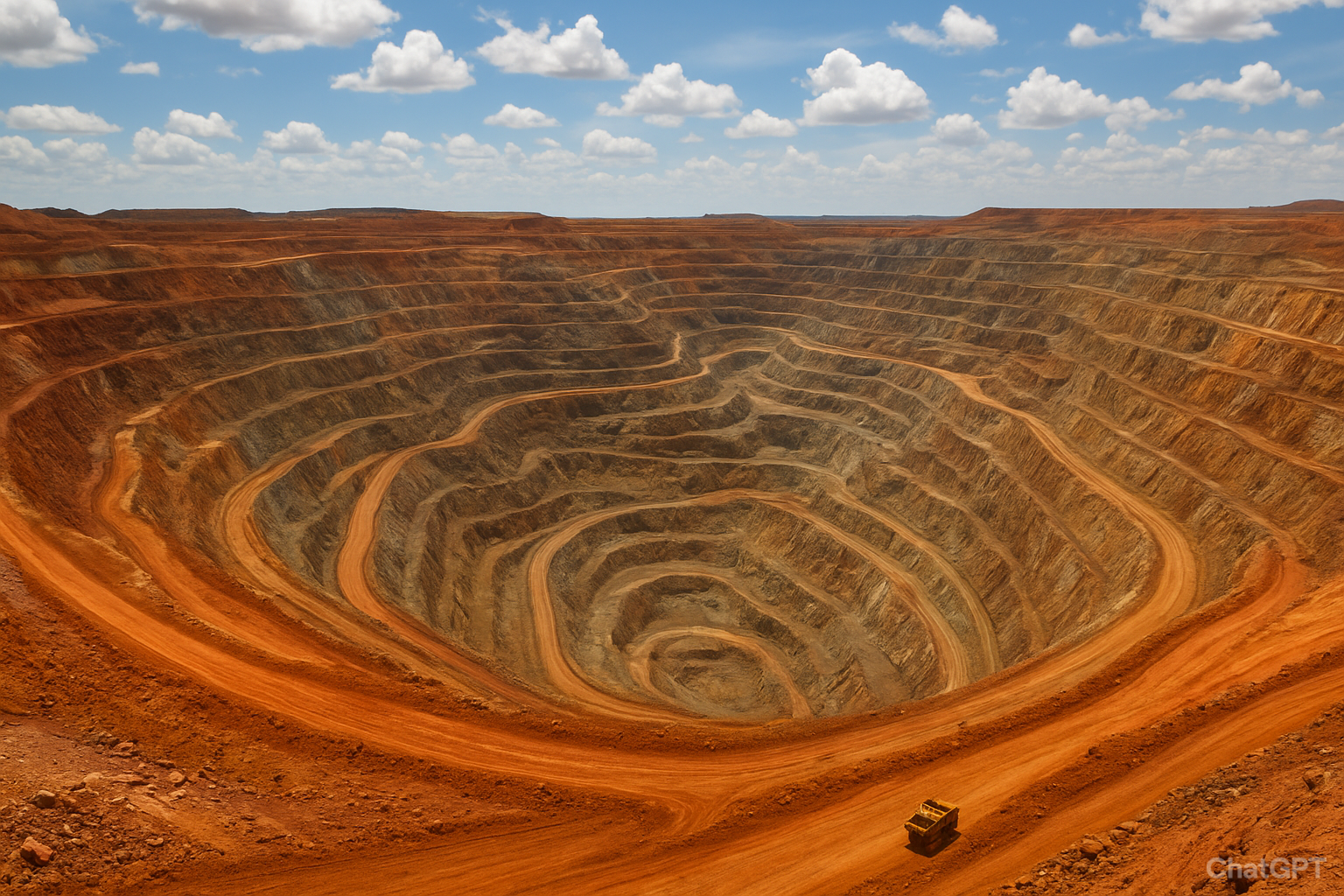
If ore is near surface, you typically use open-pit mining with benching, drill-and-blast, and large haul trucks.
You design pit slopes, bench heights, and waste-rock handling based on geotechnical studies and ore-waste cutoffs.
For deeper or higher-grade deposits, underground methods like block caving, sublevel caving, or cut-and-fill are common.
Block caving suits massive, low-cost ore bodies; selective stoping methods suit irregular, high-grade veins.
You will choose fleet, drill patterns, and fragmentation targets to optimize productivity and recovery.
Grade control sampling and real-time ore-waste reconciliation keep mill feed consistent and reduce dilution.
Ore Processing and Refining
Sulfide ores usually go to a concentrator where crushing, grinding, and froth flotation produce a copper concentrate (20–35% Cu).
You control particle size, reagent dosages, and flotation residence time to maximize recovery and concentrate grade.
Oxide ores often use hydrometallurgy: heap leaching with sulfuric acid, followed by solvent extraction and electrowinning (SX-EW) to produce cathodes.
SX parameters—organic phase composition, phase ratios, and strip chemistry—determine purity and current efficiency in electrowinning.
Concentrates from flotation go to smelters for pyrometallurgy: smelting, converting, and anode casting.
Refining via electrolytic or fire-refining yields 99.99% copper cathodes ready for wire, tubing, and industrial use.
Waste Management and Tailings
You must classify waste streams: waste rock, tailings, process water, and smelter slag.
Design choices focus on containment, stability, and minimizing acid drainage from sulfide-rich materials.
Tailings management options include conventional impoundments, thickened tailings, paste backfill, and filtered tailings.
You select the method based on seismic risk, water recovery targets, and regulatory constraints.
Monitoring programs track seepage, tailings pond stability, and water quality.
Progressive reclamation—covering waste rock, recontouring pits, and re-vegetation—reduces long-term liability and meets closure criteria.
Economic and Environmental Impact
You will see how copper shapes global prices, local jobs, and regulatory responses while also driving measurable environmental effects like water use, tailings production, and land disturbance.
Global Market Dynamics
You rely on copper for electrical wiring, renewable energy systems, and electronics, so global demand heavily influences mine investment and production decisions. Chile, Peru, and China dominate production and refining capacity, which means supply disruptions in those countries quickly move global prices.
Price volatility affects project timelines and exploration budgets. A sustained price rise prompts new mine development and expansion of existing operations; a downturn curtails exploration and can idle mines. Investors track concentrates, cathode output, and refined copper stocks in LME and SHFE warehouses to gauge liquidity and near-term supply.
Expect technological shifts—electrification and grid upgrades—to increase long-term demand. Recycling and circular-economy measures reduce primary demand growth but cannot fully replace new supply for decades. You should monitor capex trends at major producers and announced greenfield projects for forward-looking signals.
Community and Labor Considerations
You will encounter direct employment, indirect service-sector jobs, and regional economic multipliers from copper projects. Large mines can employ thousands on-site and support tens of thousands in local supply chains, while smaller operations provide seasonal or contract work.
Labor relations influence operational continuity. Strikes, negotiations over wages, and safety incidents can halt production and increase costs. Companies that invest in training, local procurement, and health services tend to secure more stable workforces and social licenses to operate.
Social impacts extend beyond jobs. You may see population influx, pressure on housing and local services, and shifts in land use. Addressing these requires transparent community agreements, predictable benefit-sharing arrangements, and commitments to local hiring and procurement.
Environmental Regulations and Sustainability
You must follow a patchwork of national laws, regional permits, and international standards that govern water discharge, air emissions, and waste management. Regulations often mandate environmental impact assessments (EIAs), progressive rehabilitation, and monitoring programs for tailings and acid drainage.
Operational practices can reduce environmental footprint. Examples include water recycling, dry-stacking tailings where feasible, and using renewable energy for processing plants. Companies increasingly publish greenhouse gas inventories and set reduction targets aligned with science-based approaches.
Regulators and financiers now expect continuous improvement and disclosure. Banks and insurers apply environmental, social, and governance (ESG) screening; noncompliance can restrict financing. You should track permitting timelines, community agreements, and ESG ratings to assess project viability and risk.